Entry-Level Veterinarian Salary in Tulsa, OK: $55,081 (2026)
Quick Answer:New veterinarians entering the Tulsa, OK job market in 2026 can expect a starting salary around $55,081 (BLS 10th-percentile benchmark for SOC 29-1131, projected from 2025 OEWS data). Stripping out Tulsa's local price level (BEA RPP 89.2 — 11% below national), a first-year paycheck buys what $61,740 would in average-cost America. Most reach the city median ($103,702) within a few years of clinical practice.
Official BLS data · View source
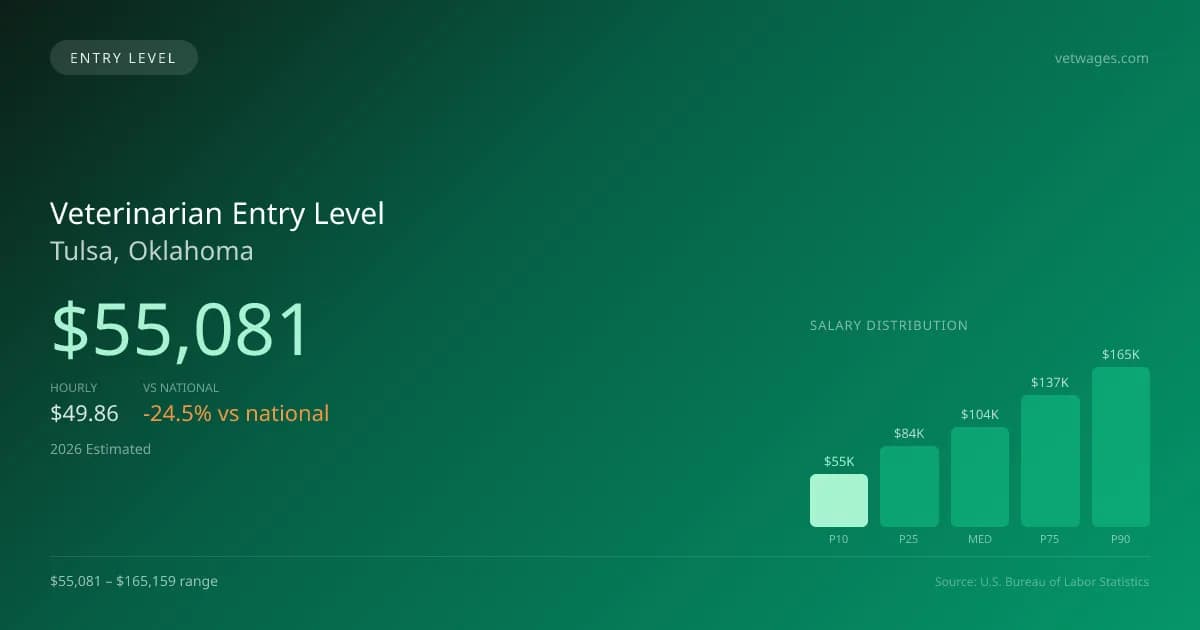
In 2026, new veterinarians in Tulsa, Oklahoma, can expect to start their careers with salaries significantly below the median for the city. The entry-level veterinarian salary in Tulsa is projected at $55,081, which is notably lower than the city’s median annual salary of $103,702. This gap suggests that early-career veterinarians in the area may need to plan carefully for financial challenges. Over the first few years, as they accumulate experience and skills, new grads might see their compensation improve; reaching around $83,772 by the 25th percentile is a realistic target within three to five years. Given this upward trajectory and the anticipated annual growth rate of 5.56%, Tulsa could remain a viable option for recent veterinary graduates seeking a foothold in the profession.
Career Earnings Timeline in Tulsa
New Graduate
Early Career
Mid Career
Experienced
Salary progression estimated from BLS percentile data. Actual progression varies by employer, certifications, and specialization.
2026 Salary Percentile Distribution in Tulsa
Entry-level veterinarians in Tulsa, OK typically start between $55,081 and $83,772 per year (2026 est.). The full salary range spans $110,078 from the 10th to 90th percentile, with the local median at $103,702 — 24.49% below the national median.
Return on Investment
The average veterinary medicine program cost in Oklahoma of $165,000 represents just 299.56% of the starting veterinarian pay ($55,081/year) in Tulsa. Most graduates begin earning back their investment from day one, though actual ROI varies based on living expenses, loan interest, and the 2-year opportunity cost of schooling.
Program cost estimates based on AVMA Council on Education (COE)-accredited DVM program data from AAVMC cost comparison tool and state veterinary college reports. Tuition-only totals for the 4-year DVM curriculum; resident vs. non-resident rates vary substantially.
DVM Salary Negotiation Tips for New Graduates in Tulsa
- 1Research the Tulsa market: entry-level veterinarian pay ranges from $55,081 to $83,772, so aim for at least the 25th percentile if you have strong credentials.
- 2Highlight any additional certifications or specialty training within the veterinary medicine field — employers in OK often pay a premium for expanded scope of work.
- 3Evaluate the full compensation package — in Tulsa, benefits like health insurance, continuing-education allowances, and schedule flexibility can add 20-30% to your effective compensation.
- 4Consider starting with a larger hospital system or multi-site employer in Tulsa for competitive entry-level pay and structured mentorship, then move to a smaller employer once you have 2-3 years of experience.
- 5Tulsa's below-average cost of living means your starting salary goes further here compared to many larger metro areas.
Veterinarian Compensation Range
The veterinarian wage spread in Tulsa is $110,078 ( 199.85%) between entry-level and top earners. Starting at $55,081, experienced hygienists can earn up to $165,159.
Represents the current salary spread across experience levels, not projected career growth rate.
2019 BLS Actual
$37,630
2025 BLS Actual
$52,180
2026 Current Est.
$55,081
2019–2027 Growth
+54.5%
Salary Trajectory for Veterinarians in Tulsa (2019–2027)
2019–2025: actual BLS OEWS data for this metro area. 2026+: CAGR 5.56% projection.
| Year | Annual Salary | Status |
|---|---|---|
| 2019 | $37,630 | Actual |
| 2020 | $37,550 | Actual |
| 2021 | $47,400 | Actual |
| 2022 | $55,630 | Actual |
| 2023 | $50,950 | Actual |
| 2024 | $53,030 | Actual |
| 2025 | $52,180 | Actual |
| 2026(current) | $55,081 | Estimated |
| 2027 | $58,144 | Projected |
Entry-level veterinarian compensation (10th percentile) in Tulsa, OK grew 38.7% over 7 years based on actual BLS metropolitan area surveys, rising from $37,630 in 2019 to $52,180 in 2025. By 2027, starting salaries are projected to reach $58,144. New graduates entering the Tulsa job market can expect continued year-over-year gains.
Note: Historical values (2019–2025) are actual BLS OEWS figures for the Tulsa metropolitan area, sourced from annual Occupational Employment and Wage Statistics surveys. 2026–2026 figures are current estimates, and 2027 values are projections, calculated using a 5.56% CAGR derived from 7-year BLS historical data. Actual salaries may vary based on employer, experience, certifications, and local market conditions.
Starting Your veterinary medicine Career in Tulsa
Several employers in the Tulsa area typically recruit entry-level veterinarians, providing valuable mentorship and smoother transitions into the workforce. Corporate chains like VCA, BluePearl, and NVA lead the market for hiring new grads by offering structured training programs, often coupled with enticing sign-on bonuses. Independent practices may allow greater independence quicker, but they might lack the comprehensive training that corporate environments provide. Continued education and credentials also play a critical role in advancing a veterinarian's career and starting salary. New graduates are typically required to earn their DVM or VMD from an AVMA-accredited institution, pass the NAVLE, and obtain a state veterinary license. For those aiming for specialized roles, pursuing a one-year rotating internship followed by a three-year residency to achieve board certification can lead to salaries that are two to three times higher. With this evolving landscape, first-year to third-year salary growth expectations should be aligned with these corporate structures and the increasing demand for specialized veterinary services in the area.
More salary data for Tulsa, OK:
Frequently Asked Questions
What is the starting salary for veterinarians in Tulsa in 2026?
How fast do veterinarian salaries grow in Tulsa?
Is veterinary medicine school worth it in Tulsa?
What do new veterinarians make right out of school in Tulsa?
How do I become a veterinarian in Oklahoma?
Related Pages
Compare Salaries
Career Resources
Nearby Cities in Oklahoma
Written by Dr. Alice Nguyen, DVM
Career Analyst
Dr. Alice Nguyen has 10 years of experience in veterinary medicine. She specializes in small animal surgery. She currently works at a suburban veterinary clinic.
Methodology & Data Source
Entry-level salary figures on this page are 2026 projections based on the Bureau of Labor Statistics Occupational Employment and Wage Statistics (OEWS) survey, May 2026 release. The 10th percentile (entry-level) is used as the starting salary benchmark for new veterinary medicine graduates. A 5.56% compound annual growth rate (CAGR), derived from 6-year national BLS wage trends, was applied to project current 2026 entry-level compensation in Tulsa. Program costs are averages and actual tuition varies by institution. ROI calculations are simplified estimates.
Data Sources & Methodology
Source: BLS, OEWS, 7-year dataset (–). Per-city data from annual BLS metropolitan area surveys.
2026 figures are projected from 2025 BLS data using a compound annual growth rate (CAGR) of 5.56%, derived from historical BLS wage trends for veterinarians (SOC 29-1131).
Compiled and verified by Dr. Alice Nguyen, DVM, a licensed veterinarian with 10+ years of clinical experience. · View source data at BLS.gov