Entry-Level Veterinarian Salary in Spanish Fork, UT: $77,705 (2026)
Quick Answer:New veterinarians entering the Spanish Fork, UT job market in 2026 can expect a starting salary around $77,705 (BLS 10th-percentile benchmark for SOC 29-1131, projected from 2025 OEWS data). Stripping out Spanish Fork's local price level (BEA RPP 98.1 — 2% below national), a first-year paycheck buys what $79,210 would in average-cost America. Most reach the city median ($133,395) within a few years of clinical practice.
Based on BLS state-level estimates · View source
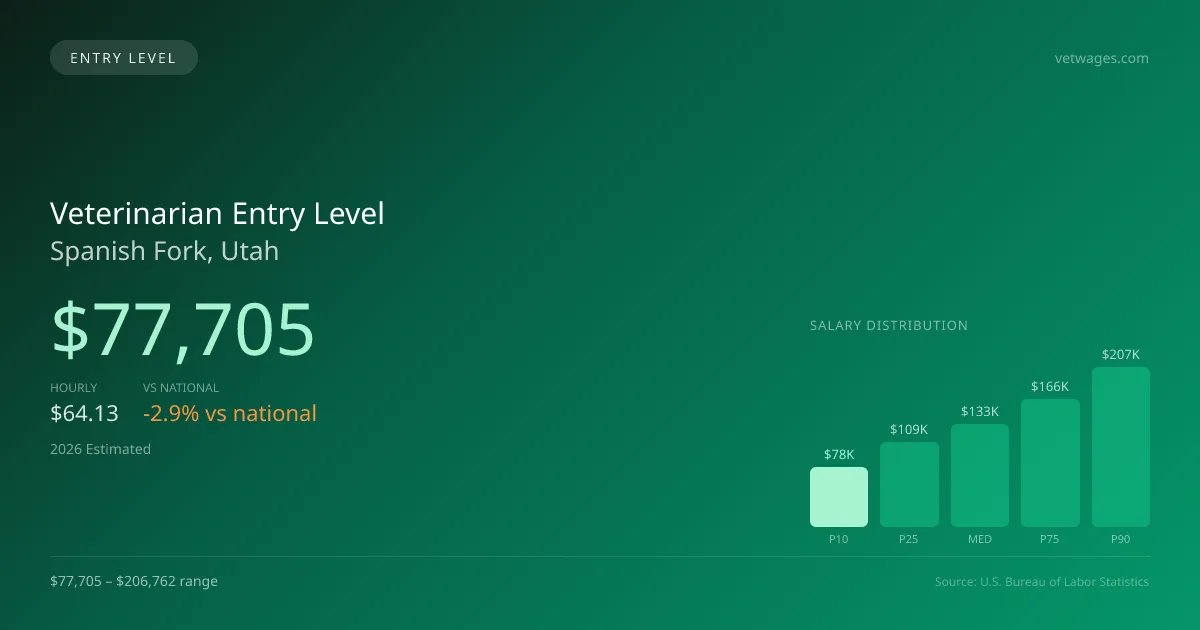
Las expectativas salariales para un veterinario recién graduado en Spanish Fork, Utah, son prometedoras, con un salario inicial que se proyecta en $77,705 para 2026. Este monto refleja un punto de entrada que puede parecer bajo al compararlo con la mediana de $133,395 que reciben los veterinarios con más experiencia en la ciudad. Sin embargo, la trayectoria de crecimiento en los primeros años es alentadora, ya que se estima que los nuevos graduados pueden llegar a ganar alrededor de $109,455 en el cuartil superior P25, y potencialmente alcanzar la mediana en un plazo de 3 a 5 años. En este sentido, Spanish Fork se presenta como un mercado atractivo para recién graduados, gracias a una proyección de crecimiento anual en la industria de 5.56%, lo que sugiere oportunidades de desarrollo en la carrera.
About the Spanish Fork Market
Salary estimated from Utah average ($114,000) adjusted for local cost of living.
Career Earnings Timeline in Spanish Fork
New Graduate
Early Career
Mid Career
Experienced
Salary progression estimated from BLS percentile data. Actual progression varies by employer, certifications, and specialization.
2026 Salary Percentile Distribution in Spanish Fork
Entry-level veterinarians in Spanish Fork, UT typically start between $77,705 and $109,455 per year (2026 est.). The full salary range spans $129,057 from the 10th to 90th percentile, with the local median at $133,395 — 2.87% below the national median.
Return on Investment
The average veterinary medicine program cost in Utah of $185,000 represents just 238.08% of the starting veterinarian pay ($77,705/year) in Spanish Fork. Most graduates begin earning back their investment from day one, though actual ROI varies based on living expenses, loan interest, and the 2-year opportunity cost of schooling.
Program cost estimates based on AVMA Council on Education (COE)-accredited DVM program data from AAVMC cost comparison tool and state veterinary college reports. Tuition-only totals for the 4-year DVM curriculum; resident vs. non-resident rates vary substantially.
DVM Salary Negotiation Tips for New Graduates in Spanish Fork
- 1Research the Spanish Fork market: entry-level veterinarian pay ranges from $77,705 to $109,455, so aim for at least the 25th percentile if you have strong credentials.
- 2Highlight any additional certifications or specialty training within the veterinary medicine field — employers in UT often pay a premium for expanded scope of work.
- 3Evaluate the full compensation package — in Spanish Fork, benefits like health insurance, continuing-education allowances, and schedule flexibility can add 20-30% to your effective compensation.
- 4Consider starting with a larger hospital system or multi-site employer in Spanish Fork for competitive entry-level pay and structured mentorship, then move to a smaller employer once you have 2-3 years of experience.
- 5Spanish Fork's moderate cost of living means your starting salary goes further here compared to many larger metro areas.
Veterinarian Compensation Range
The veterinarian wage spread in Spanish Fork is $129,057 ( 166.09%) between entry-level and top earners. Starting at $77,705, experienced hygienists can earn up to $206,762.
Represents the current salary spread across experience levels, not projected career growth rate.
2019 BLS Actual
$57,838
2025 BLS Actual
$73,612
2026 Current Est.
$77,705
2019–2027 Growth
+41.8%
Salary Trajectory for Veterinarians in Spanish Fork (2019–2027)
2019–2025: actual BLS OEWS data for this metro area. 2026+: CAGR 5.56% projection.
| Year | Annual Salary | Status |
|---|---|---|
| 2019 | $57,838 | Actual |
| 2020 | $60,437 | Actual |
| 2021 | $60,507 | Actual |
| 2022 | $62,090 | Actual |
| 2023 | $72,059 | Actual |
| 2024 | $64,224 | Actual |
| 2025 | $73,612 | Actual |
| 2026(current) | $77,705 | Estimated |
| 2027 | $82,025 | Projected |
Entry-level veterinarian compensation (10th percentile) in Spanish Fork, UT grew 27.3% over 7 years based on actual BLS metropolitan area surveys, rising from $57,838 in 2019 to $73,612 in 2025. By 2027, starting salaries are projected to reach $82,025. New graduates entering the Spanish Fork job market can expect continued year-over-year gains.
Note: Historical values (2019–2025) are actual BLS OEWS figures for the Spanish Fork metropolitan area, sourced from annual Occupational Employment and Wage Statistics surveys. 2026–2026 figures are current estimates, and 2027 values are projections, calculated using a 5.56% CAGR derived from 7-year BLS historical data. Actual salaries may vary based on employer, experience, certifications, and local market conditions.
Starting Your veterinary medicine Career in Spanish Fork
En términos de empleadores en Spanish Fork que contratan a nuevos graduados veterinarios, existen varias opciones. Las cadenas corporativas como VCA, BluePearl y NVA son conocidas por ofrecer programas de mentoría estructurada y, a menudo, bonificaciones por firmar, lo que puede ser atractivo para los recién llegados a la profesión. Por otro lado, las prácticas veterinarias independientes pueden proporcionar una autonomía más rápida, aunque con menos capacitación estructurada inicial. Para aquellos que buscan incrementar su salario de inicio, contar con un título DVM o VMD de una escuela acreditada por la AVMA, así como aprobar el examen NAVLE y obtener la licencia estatal, es fundamental. Además, un internado rotativo de un año seguido de una residencia de especialidad de tres años puede conducir a una certificación de alta especialización, lo que puede multiplicar significativamente las oportunidades salariales. A medida que la consolidación corporativa sigue moldeando el sector, aquellos veterinarios que se enfoquen en desarrollar especialidades tienen potencial para ganar salarios 2 a 3 veces superiores a los de la práctica general. Con una planificación cuidadosa y la construcción de redes adecuadas, los nuevos graduados pueden esperar un crecimiento salarial sólido en sus primeros años en el campo.
More salary data for Spanish Fork, UT:
Frequently Asked Questions
What is the starting salary for veterinarians in Spanish Fork in 2026?
How fast do veterinarian salaries grow in Spanish Fork?
Is veterinary medicine school worth it in Spanish Fork?
What do new veterinarians make right out of school in Spanish Fork?
How do I become a veterinarian in Utah?
Related Pages
Compare Salaries
Career Resources
Nearby Cities in Utah
Written by Dr. Alice Nguyen, DVM
Career Analyst
Dr. Alice Nguyen has 10 years of experience in veterinary medicine. She specializes in small animal surgery. She currently works at a suburban veterinary clinic.
Methodology & Data Source
Entry-level salary figures on this page are 2026 projections based on the Bureau of Labor Statistics Occupational Employment and Wage Statistics (OEWS) survey, May 2026 release. The 10th percentile (entry-level) is used as the starting salary benchmark for new veterinary medicine graduates. A 5.56% compound annual growth rate (CAGR), derived from 6-year national BLS wage trends, was applied to project current 2026 entry-level compensation in Spanish Fork. Program costs are averages and actual tuition varies by institution. ROI calculations are simplified estimates.
Data Sources & Methodology
Salary data for Spanish Fork is estimated from official BLS state-level occupational wage data (2025), adjusted for regional cost-of-living differences using BEA RPP (Regional Price Parities).
2026 figures are projected from 2025 BLS data using a compound annual growth rate (CAGR) of 5.56%, derived from historical BLS wage trends for veterinarians (SOC 29-1131).
Compiled and verified by Dr. Alice Nguyen, DVM, a licensed veterinarian with 10+ years of clinical experience. · View source data at BLS.gov