Veterinarian Salary in Wisconsin: $118,233 (2026)
Quick Answer:Across Wisconsin's 46 metropolitan areas, the average median veterinarian pay sits at $118,233/year heading into 2026 — a figure projected from 2025 BLS OEWS wage data for SOC 29-1131. Because Wisconsin sits at BEA RPP 93.4 (7% below the U.S. baseline), that statewide median translates to roughly $126,588 in nationally-comparable purchasing power. Highest-paying metros: Waukesha ($119,264), Milwaukee ($117,780), Madison ($115,210).
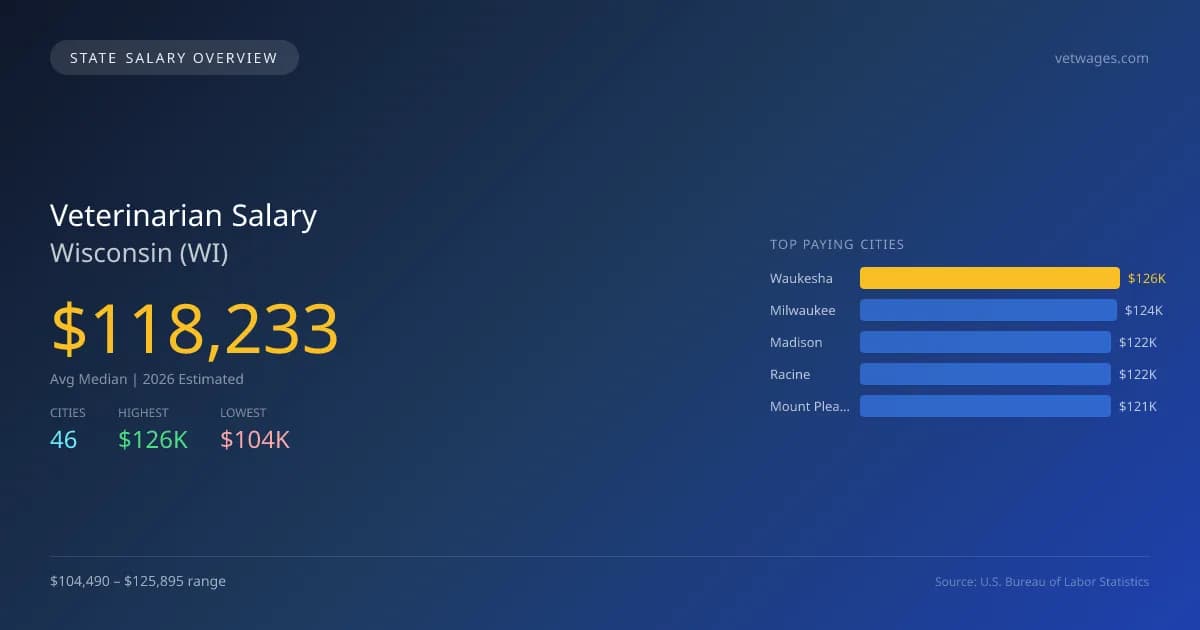
In Wisconsin, the average median salary for veterinarians is projected to be $118,232 in 2026, which is approximately 13.9% lower than the national median of $137,334. The disparity in pay across cities is significant, with Waukesha leading at $125,895, while Wisconsin Rapids has the lowest salary at $104,490, creating a gap of $21,405. This variation can be attributed to factors such as cost of living differences, local demand for veterinary services, and the presence of specialty veterinary practices. Veterinarians in Wisconsin must meet state licensing requirements that include passing a national board examination and the state veterinary exam. The scope of practice laws in Wisconsin can also affect salary potential, with certain veterinarians specializing in areas that are in higher demand. The overall job market for veterinarians in the state is expected to grow at an annual rate of 5.56%, driven by factors such as increasing pet ownership and demand for preventive care services. With 1,515 veterinarians employed in the state, cities like Milwaukee ($124,329), Madison ($121,616), Racine ($121,500), and Mount Pleasant ($121,320) also show competitive salaries, reflecting the broader demand for veterinary professionals across Wisconsin.
Wisconsin Veterinarian Salary Range
Overall salary range in Wisconsin: $62,284 (lowest entry-level) to $195,137 (highest top earner)
Wisconsin vs National Average
Wisconsin veterinarians earn 13.91% less than the national median ($-19,101/year difference).
Wisconsin Veterinarian Salary Distribution (2026)
Veterinarian salaries in Wisconsin range from $81,946 (entry-level, 10th percentile) to $169,073 (top earners, 90th percentile), with a median of $118,233. The Wisconsin median is $19,101 below the US national median of $137,334. The average hourly rate is $56.84/hr. Approximately 1,515 veterinarians are employed across 46 cities.
2019 BLS Actual
$87,599
2025 BLS Actual
$112,005
2026 Current Est.
$118,233
2019–2027 Growth
+42.5%
Salary Trajectory for Veterinarians in Wisconsin (2019–2027)
2019–2025: actual BLS OEWS data for this metro area. 2026+: CAGR 5.56% projection.
| Year | Annual Salary | Status |
|---|---|---|
| 2019 | $87,599 | Actual |
| 2020 | $92,139 | Actual |
| 2021 | $97,738 | Actual |
| 2022 | $99,286 | Actual |
| 2023 | $104,599 | Actual |
| 2024 | $107,051 | Actual |
| 2025 | $112,005 | Actual |
| 2026(current) | $118,233 | Estimated |
| 2027 | $124,807 | Projected |
Based on 7 years of BLS OEWS data for the Wisconsin metropolitan area, the median veterinarian salary grew 27.9% from $87,599 (2019) to $112,005 (2025). At a 5.56% compound annual growth rate, salaries are projected to reach $124,807 by 2027 — a total increase of $37,208 (42.48%) from 2019.
Note: Historical values (2019–2025) are actual BLS OEWS figures for the Wisconsin metropolitan area, sourced from annual Occupational Employment and Wage Statistics surveys. 2026–2026 figures are current estimates, and 2027 values are projections, calculated using a 5.56% CAGR derived from 7-year BLS historical data. Actual salaries may vary based on employer, experience, certifications, and local market conditions.
Top 5 Highest Paying Cities in Wisconsin
Lowest Paying Cities in Wisconsin
| City | Median Salary |
|---|---|
| Wisconsin Rapids | $104,490 |
| Middleton | $105,364 |
| Platteville | $106,495 |
| Mequon | $106,504 |
| Wausau | $107,186 |
Best Value Cities for Veterinarians in Wisconsin
When adjusted for local cost of living, these Wisconsin cities offer the most purchasing power for veterinarians.
| City | Nominal Salary | CoL Index | Adjusted Salary |
|---|---|---|---|
| Waukesha | $125,895 | 93.4 | $134,791 |
| Mount Pleasant | $121,320 | 93.4 | $129,893 |
| Milwaukee | $124,329 | 96.937 | $128,258 |
| Racine | $121,500 | 95.961 | $126,614 |
| Eau Claire | $116,243 | 92.796 | $125,267 |
Adjusted salary = nominal salary × (100 / CoL index). CoL index: 100 = national average. Lower index = lower cost of living.
Salary by Experience Level in Wisconsin
| Experience Level | Estimated Annual |
|---|---|
| Entry Level (0-2 years) | $81,946 |
| Mid Career (3-7 years) | $118,233 |
| Experienced (7+ years) | $169,073 |
Estimates based on BLS percentile data averaged across Wisconsin metro areas. Individual pay varies by employer, certifications, and specialization.
All 46 Cities in Wisconsin
| # | City | Median Salary |
|---|---|---|
| 1 | Waukesha | $125,895 |
| 2 | Milwaukee | $124,329 |
| 3 | Madison | $121,616 |
| 4 | Racine | $121,500 |
| 5 | Mount Pleasant | $121,320 |
| 6 | Kenosha | $117,161 |
| 7 | Eau Claire | $116,243 |
| 8 | West Allis | $114,055 |
| 9 | Fitchburg | $113,299 |
| 10 | Greenfield | $113,289 |
| 11 | Onalaska | $112,569 |
| 12 | Oshkosh | $112,340 |
| 13 | Menomonee Falls | $112,308 |
| 14 | Brookfield | $112,042 |
| 15 | West Bend | $111,981 |
| 16 | De Pere | $111,893 |
| 17 | Appleton | $111,682 |
| 18 | New Berlin | $111,680 |
| 19 | Beloit | $111,524 |
| 20 | Janesville | $111,271 |
| 21 | La Crosse | $111,081 |
| 22 | Sun Prairie | $110,733 |
| 23 | Green Bay | $110,680 |
| 24 | Caledonia | $110,433 |
| 25 | Muskego | $110,194 |
| 26 | Stevens Point | $109,681 |
| 27 | Franklin | $109,558 |
| 28 | Oak Creek | $109,212 |
| 29 | Superior | $109,045 |
| 30 | Manitowoc | $108,992 |
| 31 | Sheboygan | $108,903 |
| 32 | Fond du Lac | $108,656 |
| 33 | Pewaukee | $108,586 |
| 34 | South Milwaukee | $108,269 |
| 35 | Pleasant Prairie | $108,252 |
| 36 | Menomonie | $108,140 |
| 37 | Whitewater | $108,131 |
| 38 | Wauwatosa | $108,036 |
| 39 | Germantown | $107,960 |
| 40 | Marshfield | $107,917 |
| 41 | River Falls | $107,386 |
| 42 | Wausau | $107,186 |
| 43 | Mequon | $106,504 |
| 44 | Platteville | $106,495 |
| 45 | Middleton | $105,364 |
| 46 | Wisconsin Rapids | $104,490 |
More Wisconsin Salary Data
Senior / Experienced
Top earner salaries for experienced veterinarians.
Compare Cities in Wisconsin
View all comparisons →Explore More Veterinarian Salary Data
Frequently Asked Questions
How much do veterinarians make in Wisconsin in 2026?
What is the highest paying city for veterinarians in Wisconsin?
How does Wisconsin veterinarian pay compare to the national average?
What is the entry-level veterinarian salary in Wisconsin?
How many veterinarians are employed in Wisconsin?
Which Wisconsin city offers the best value for veterinarians?
Written by Dr. Alice Nguyen, DVM
Career Analyst
Dr. Alice Nguyen has 10 years of experience in veterinary medicine. She specializes in small animal surgery. She currently works at a suburban veterinary clinic.
Methodology & Data Source
Statewide salary figures on this page are 2026 projections based on the Bureau of Labor Statistics Occupational Employment and Wage Statistics (OEWS) survey, May 2026 release. A 5.56% compound annual growth rate (CAGR), derived from 6-year national BLS wage trends, was applied to each metro area's reported salary to estimate current 2026 veterinarian compensation across Wisconsin. State averages are employment-weighted across 46 metro areas — larger metro areas with more veterinarianscontribute proportionally more to the average, producing figures that better reflect typical compensation. Individual pay varies by city, employer, certifications, and experience.
Data Sources & Methodology
Source: BLS, OEWS, 7-year dataset (–). Per-city data from annual BLS metropolitan area surveys.
2026 figures are projected from 2025 BLS data using a compound annual growth rate (CAGR) of 5.56%, derived from historical BLS wage trends for veterinarians (SOC 29-1131).
Compiled and verified by Dr. Alice Nguyen, DVM, a licensed veterinarian with 10+ years of clinical experience. · View source data at BLS.gov